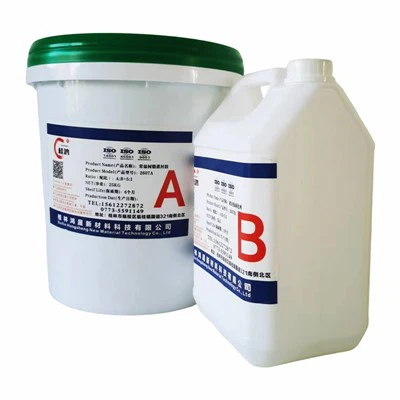
As a leading supplier of LED encapsulation epoxy, I am often asked about the production process of this crucial material. In this blog post, I will take you through the detailed steps involved in manufacturing LED encapsulation epoxy, highlighting the significance of each stage and the key factors that contribute to the quality of the final product.
1. Raw Material Selection
The production of LED encapsulation epoxy begins with the careful selection of raw materials. Epoxy resin and curing agents are the two primary components, and their quality directly impacts the performance of the final encapsulant.
Epoxy resins are typically chosen for their excellent adhesion, chemical resistance, and electrical insulation properties. They can be derived from various sources, such as bisphenol A, bisphenol F, or novolac resins. The choice of epoxy resin depends on the specific requirements of the LED application, such as the desired refractive index, thermal stability, and mechanical strength.
Curing agents are used to initiate the cross - linking reaction of the epoxy resin, transforming it from a liquid state to a solid state. Common curing agents include amines, anhydrides, and phenols. The selection of the curing agent is crucial as it affects the curing time, temperature, and the final properties of the encapsulant.
In addition to epoxy resin and curing agents, other additives may be incorporated into the formulation to enhance specific properties. For example, fillers can be added to improve thermal conductivity, while UV stabilizers can be used to protect the LED from UV radiation.
2. Mixing
Once the raw materials are selected, they are carefully measured and mixed in a precise ratio. This step is critical as an incorrect ratio can lead to incomplete curing, poor mechanical properties, or other performance issues.
The mixing process usually takes place in a high - speed mixer or a planetary mixer. The raw materials are added to the mixer in a specific order, and the mixer is operated at a controlled speed and temperature to ensure thorough mixing. During the mixing process, the epoxy resin and the curing agent react with each other, starting the cross - linking reaction.
It is important to note that the mixing process should be carried out in a clean and controlled environment to prevent contamination. Any impurities in the mixture can affect the quality of the final product.
3. Degassing
After mixing, the epoxy mixture contains air bubbles that need to be removed. Air bubbles can cause defects in the LED encapsulation, such as voids or reduced mechanical strength.
Degassing is typically achieved by placing the epoxy mixture in a vacuum chamber. The vacuum reduces the pressure, causing the air bubbles to rise to the surface and escape. The degassing process may take several minutes to hours, depending on the viscosity of the epoxy mixture and the size of the air bubbles.
4. Encapsulation
Once the epoxy mixture is degassed, it is ready for encapsulation. There are several methods for encapsulating LEDs, including potting, molding, and dispensing.
Potting is a common method where the LED is placed in a mold, and the epoxy mixture is poured over it. The mold is then heated to cure the epoxy. This method is suitable for small - scale production and can provide good protection for the LED.


Molding involves using a pre - made mold to shape the epoxy around the LED. This method is more suitable for large - scale production and can produce encapsulants with consistent shapes and dimensions.
Dispensing is a precise method where the epoxy mixture is dispensed onto the LED using a syringe or a dispenser. This method is often used for high - precision applications, such as in the production of mini - LEDs.
5. Curing
After encapsulation, the epoxy needs to be cured to achieve its final properties. Curing is a chemical reaction that occurs when the epoxy resin and the curing agent react with each other, forming a three - dimensional network structure.
The curing process can be carried out at room temperature or at an elevated temperature, depending on the type of epoxy resin and the curing agent used. In some cases, a two - step curing process may be used, where the epoxy is first cured at a lower temperature to achieve a partial cure, and then cured at a higher temperature to complete the reaction.
The curing time and temperature are critical factors that affect the final properties of the encapsulant. Over - curing or under - curing can lead to poor mechanical properties, reduced adhesion, or other performance issues.
6. Quality Control
Quality control is an essential part of the production process of LED encapsulation epoxy. Various tests are carried out to ensure that the encapsulant meets the required specifications.
Some of the common tests include:
- Mechanical tests: These tests measure the mechanical properties of the encapsulant, such as hardness, tensile strength, and impact resistance.
- Thermal tests: These tests evaluate the thermal properties of the encapsulant, such as thermal conductivity and thermal expansion coefficient.
- Optical tests: These tests measure the optical properties of the encapsulant, such as refractive index and transmittance.
- Electrical tests: These tests assess the electrical properties of the encapsulant, such as electrical insulation resistance.
By conducting these tests, we can ensure that the LED encapsulation epoxy meets the high - quality standards required for various LED applications.
Our Product Range
As a supplier of LED encapsulation epoxy, we offer a wide range of products to meet the diverse needs of our customers. Our product portfolio includes Super High Temperature Epoxy, which is designed to withstand high temperatures, making it suitable for applications where thermal stability is crucial. We also offer Heat Conducting Epoxy, which has excellent thermal conductivity, helping to dissipate heat from the LED and improve its performance. Additionally, our Thermally Conductive Epoxy Electrically Insulating product provides both thermal conductivity and electrical insulation, making it ideal for applications where electrical safety is a concern.
Contact Us for Procurement
If you are interested in purchasing LED encapsulation epoxy for your LED manufacturing process, we would be more than happy to discuss your requirements. Our team of experts can provide you with detailed information about our products, including their properties, applications, and pricing. We are committed to providing high - quality products and excellent customer service. Please feel free to reach out to us to start a procurement discussion.
References
- "Epoxy Resins: Chemistry and Technology" by Clayton A. May
- "LED Packaging and Applications" by Jingyu Lin and Jianping Liu