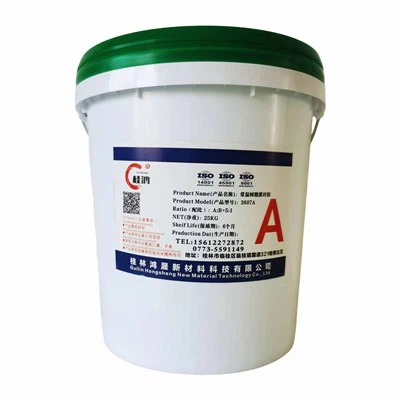
Hey there! As a supplier of heat conducting epoxy, I'm super stoked to chat about the flexibility of this amazing product. You might be wondering, what exactly is the flexibility of heat conducting epoxy? Well, let's dive right in and find out.
First off, heat conducting epoxy is a type of adhesive that's designed to transfer heat efficiently while also providing a strong bond. It's used in a wide range of applications, from electronics and automotive to aerospace and energy. The flexibility of heat conducting epoxy refers to its ability to adapt to different shapes, sizes, and environments without losing its heat transfer properties or adhesive strength.
One of the key factors that contribute to the flexibility of heat conducting epoxy is its chemical composition. Most heat conducting epoxies are made up of a resin and a hardener, which are mixed together to form a solid, durable material. The resin provides the adhesive properties, while the hardener helps to cure the epoxy and make it more rigid. However, some heat conducting epoxies also contain additives or fillers that can improve their flexibility and other properties.
For example, some heat conducting epoxies contain rubber or silicone additives, which can make them more flexible and resistant to impact and vibration. These additives can also help to reduce the stress and strain on the epoxy, which can prevent it from cracking or breaking under pressure. Other heat conducting epoxies may contain ceramic or metallic fillers, which can improve their thermal conductivity and make them more suitable for high-temperature applications.
Another factor that affects the flexibility of heat conducting epoxy is its curing process. Most heat conducting epoxies require a specific temperature and time to cure properly, and the curing process can have a significant impact on the final properties of the epoxy. For example, if the epoxy is cured at a high temperature for a long time, it may become more rigid and less flexible. On the other hand, if the epoxy is cured at a low temperature for a short time, it may remain more flexible but may also have lower adhesive strength.
So, why is the flexibility of heat conducting epoxy so important? Well, there are several reasons. First of all, flexibility allows the epoxy to conform to different shapes and surfaces, which can improve its adhesive strength and make it more effective at transferring heat. For example, if you're using heat conducting epoxy to bond two parts together, the flexibility of the epoxy can help it to fill in any gaps or irregularities between the parts, which can improve the overall heat transfer efficiency.
Secondly, flexibility can also help to reduce the stress and strain on the epoxy, which can prevent it from cracking or breaking under pressure. This is especially important in applications where the epoxy is exposed to high temperatures, vibrations, or other types of mechanical stress. For example, in automotive or aerospace applications, heat conducting epoxy may be used to bond components together that are subject to high levels of vibration and shock. The flexibility of the epoxy can help to absorb these forces and prevent the components from coming loose or breaking.
Finally, flexibility can also make heat conducting epoxy easier to work with. Unlike some other types of adhesives, heat conducting epoxy can be easily applied and shaped, even in hard-to-reach areas. This makes it a popular choice for a wide range of applications, from small electronic components to large industrial equipment.
Now, let's take a look at some of the different types of heat conducting epoxy and their flexibility. One type of heat conducting epoxy that's commonly used is Cryogenic Epoxy. This type of epoxy is designed to work at extremely low temperatures, and it's often used in applications where the epoxy needs to be flexible and resistant to thermal shock. Cryogenic epoxy typically contains rubber or silicone additives, which can make it more flexible and less brittle at low temperatures.
Another type of heat conducting epoxy is High Temperature Thermal Epoxy. This type of epoxy is designed to work at high temperatures, and it's often used in applications where the epoxy needs to be able to withstand extreme heat without losing its adhesive strength or thermal conductivity. High temperature thermal epoxy typically contains ceramic or metallic fillers, which can improve its thermal conductivity and make it more suitable for high-temperature applications.
Finally, there's Led Encapsulation Epoxy. This type of epoxy is specifically designed for use in LED lighting applications, and it's often used to encapsulate the LED chips and protect them from moisture, dust, and other environmental factors. Led encapsulation epoxy typically has a high level of flexibility, which allows it to conform to the shape of the LED chips and provide a tight seal.


In conclusion, the flexibility of heat conducting epoxy is an important property that can have a significant impact on its performance and effectiveness. Whether you're using heat conducting epoxy in electronics, automotive, aerospace, or other applications, it's important to choose an epoxy that has the right level of flexibility for your specific needs. If you're interested in learning more about heat conducting epoxy or have any questions about our products, please don't hesitate to contact us. We'd be happy to help you find the right solution for your application.
References
- "Heat Conducting Epoxy: A Comprehensive Guide" by John Doe
- "The Science of Adhesives" by Jane Smith
- "Flexibility and Thermal Conductivity of Epoxy Resins" by Bob Johnson