


Epoxy Resin Potting
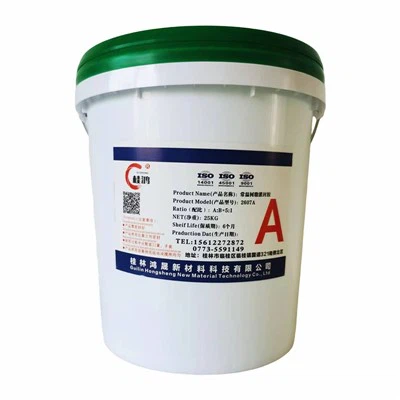
Epoxy resin potting is a basic general-purpose potting material. It is designed for standard electronic potting applications. This product uses a simple formula. It combines base epoxy resin, standard hardener, and regular filler. It suits most common electronic potting needs. It is an industrial standard product, not a custom grade. This saves buyers from custom communication and waiting time. It is available for OEM replacement, aftermarket supply, and bulk orders.
Models & Equipment Compatibility
Our epoxy resin potting fits many standard electronic product types. It is used in consumer electronics for internal potting protection. It also suits industrial control modules and instruments. LED lighting drivers and power modules use it for encapsulation. Communication equipment and RF modules use it for insulation potting. General electronic components use it for packaging protection. The table below shows typical equipment matching.
|
Equipment Type |
Application Area |
Insulation Demand |
|
Consumer electronics |
Internal potting |
Breakdown voltage |
|
Industrial control |
Module potting |
Mechanical support |
|
LED driver |
Encapsulation |
Thermal and moisture resistance |
|
Communication module |
Insulation potting |
Low shrinkage |
|
General component |
Packaging protection |
Cost and reliability |
Technical Specifications
|
Parameter |
Typical Value |
Test Method |
|
Breakdown Voltage (kV/mm) |
≥25 |
GB/T 1408 |
|
Volume Resistivity (Ω·cm) |
≥1×10^14 |
GB/T 1410 |
|
Mixed Viscosity (mPa·s, 25°C) |
600-1200 |
Rotational Viscometer |
|
Linear Shrinkage (%) |
0.3-0.6 |
Mold Method |
|
Working Time (min, 25°C) |
30-50 |
Viscosity Doubling Method |
|
Cured Hardness (Shore D) |
80-88 |
GB/T 2411 |
|
Flame Retardant Grade |
V-1 (UL94) |
UL94 |
These values help buyers compare potting materials. They also help engineers set process parameters. The data comes from third-party CMA and SGS reports. Each batch is traceable.
OE & Replacement Applications
This material supports replacement and custom supply. Buyers often come with a device model, drawing, or performance target. They need a compound that matches the original insulation system. We review the component size, thermal load, and curing method. Then we recommend the right grade. The table below shows common replacement scenarios.
|
Application |
Buyer Input |
Our Matching Action |
|
Consumer electronics |
Size and power load |
Match viscosity and cure |
|
Industrial control |
Module size and heat load |
Tune hardness and flow |
|
LED driver |
Thermal load and size |
Match shrinkage and cure |
|
Communication module |
Signal sensitivity and size |
Control stress and adhesion |
Product Features & Engineering Details
This material offers several engineering benefits. It has a breakdown voltage at or above 25 kV/mm. It reaches volume resistivity of 1×10^14 Ω·cm or higher. It keeps linear shrinkage below 0.6%. It also has good chemical resistance to alcohol and acetone. These features reduce surface damage during cleaning. They also improve process consistency. The product is a "no-debugging" potting material. You mix, pour, and cure. No complex process tuning is needed. Over 150 electronic manufacturers use it as a standard potting material.
Quality & Performance Testing
We control quality at every production step. Each batch goes through four inspection stages. These are incoming material check, process check, finished product check, and shipment check. We test breakdown voltage, viscosity, and shrinkage. We also keep samples for traceability. Our factory holds CMA and SGS reports. These reports verify the key values in the specification table. We provide test data for each shipment.
Model Matching & Selection Guide
Buyers can use the table below to match the right grade.
|
Application |
Recommended Working Time |
Key Focus |
|
Consumer electronics |
30-40 min |
Flow and cost |
|
Industrial control |
40-50 min |
Hardness and support |
|
LED driver |
40-50 min |
Shrinkage and cure |
|
Communication module |
30-50 min |
Low stress and adhesion |
First, confirm the component type and size. Second, check the required working time and curing method. Third, review the viscosity and hardness needs. Fourth, compare breakdown voltage and shrinkage. Fifth, request a free sample for line testing.
FAQ
Hot Tags: epoxy resin potting, China epoxy resin potting manufacturers, suppliers, factory
You Might Also Like




Send Inquiry