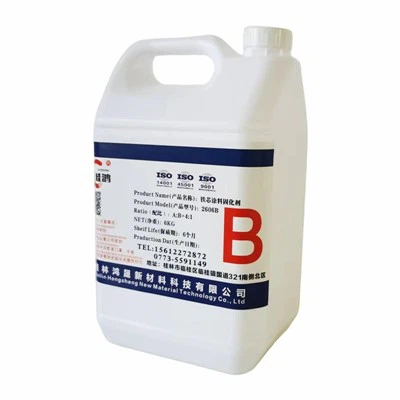
Hey there! As a supplier of Super Strength Epoxy, I often get asked a ton of questions about where and how our product can be used. One of the more interesting queries I've received lately is, "Can Super Strength Epoxy be used for bonding nickel?" Let's dig into this topic and find out the answer.
First off, let's talk a bit about nickel. Nickel is a pretty cool metal. It's shiny, it's corrosion - resistant, and it's used in a whole bunch of industries. You'll find it in electronics, automotive parts, and even some types of jewelry. Because of its properties, bonding nickel can be a challenge. Traditional glues might not work well because nickel has a smooth surface and can be a bit resistant to adhesion.
Now, let's turn our attention to Super Strength Epoxy. This stuff is a game - changer. It's designed to provide a super - strong bond on a variety of surfaces. The key to its strength lies in its chemical composition. When the two components of the epoxy are mixed together, a chemical reaction occurs that creates a tough, durable bond.
The question is, does it work on nickel? Well, the short answer is yes, in most cases. Super Strength Epoxy can form a strong bond with nickel, but there are a few things you need to do to ensure a successful bond.
Surface Preparation
The most important step is surface preparation. Nickel has a thin oxide layer on its surface, and this layer can prevent the epoxy from bonding properly. So, you need to clean the nickel surface thoroughly. Start by using a mild detergent and water to remove any dirt, grease, or oils. Then, dry the surface completely. Next, you can use sandpaper to lightly abrade the surface. This helps to increase the surface area and gives the epoxy more "grip." Just make sure not to sand too hard, or you might damage the nickel.
Mixing the Epoxy
Once the surface is ready, it's time to mix the Super Strength Epoxy. Follow the instructions on the package carefully. Usually, you'll need to mix the resin and the hardener in the correct ratio. Use a clean, dry container and a stir stick. Mix the two components for at least a few minutes until the color is uniform. This ensures that the chemical reaction occurs properly and that you get the strongest possible bond.
Applying the Epoxy
When applying the epoxy to the nickel surface, use a small brush or a syringe. Apply a thin, even layer of the epoxy. Make sure to cover the entire area that you want to bond. If you're bonding two pieces of nickel together, press them firmly together and hold them in place until the epoxy starts to set. This might take anywhere from a few minutes to a few hours, depending on the specific product.
Benefits of Using Super Strength Epoxy for Bonding Nickel
There are several benefits to using Super Strength Epoxy for bonding nickel. Firstly, it provides a strong, durable bond. This is crucial, especially in applications where the bonded parts will be under stress or pressure. For example, in automotive parts, the bond needs to hold up to the vibrations and forces generated by the engine.


Secondly, Super Strength Epoxy is resistant to heat, chemicals, and moisture. This means that the bond will remain strong even in harsh environments. In electronics, where components might be exposed to heat or humidity, this is a huge advantage.
Another great thing is that it's relatively easy to use. You don't need any special equipment or training to apply the epoxy. Just follow the steps I mentioned earlier, and you should be able to get a good bond.
Comparisons with Other Epoxy Products
There are other epoxy products on the market, like Low Cost Epoxy. While low - cost epoxy might be cheaper, it might not provide the same level of strength and durability as Super Strength Epoxy. If you're working on a project where a strong bond is essential, it's worth investing in a high - quality product like ours.
Thermally Conductive Epoxy Adhesive is another option. This type of epoxy is designed to conduct heat, which can be useful in some applications. However, if heat conduction isn't a requirement, Super Strength Epoxy is a better choice because it's more versatile and can be used in a wider range of projects.
Real - World Applications
Let's look at some real - world examples of where Super Strength Epoxy can be used for bonding nickel. In the electronics industry, it can be used to bond nickel - coated components to circuit boards. This ensures that the components stay in place and that the electrical connections are stable.
In the automotive industry, it can be used to bond nickel - plated parts, like decorative trim or engine components. The strong bond provided by the epoxy helps to prevent the parts from coming loose, even under extreme conditions.
In the jewelry industry, Super Strength Epoxy can be used to bond nickel - based alloys. This allows jewelers to create intricate designs and ensure that the pieces are durable and long - lasting.
If you're interested in using Super Strength Epoxy for your nickel - bonding projects, I'd love to hear from you. Whether you're a small - scale hobbyist or a large - scale manufacturer, we can provide you with the right amount of product and offer support throughout the process. You can visit our product page Super Strength Epoxy to learn more about the product. And if you have any questions or want to discuss your specific needs, don't hesitate to reach out. We're here to help you get the best results for your projects.
References
- Handbook of Adhesive Bonding, Second Edition by Alan V. Pocius
- Epoxy Resins: Chemistry and Technology, Third Edition by Clayton A. May